Large Print Crossword Puzzles for Seniors: What to Look For
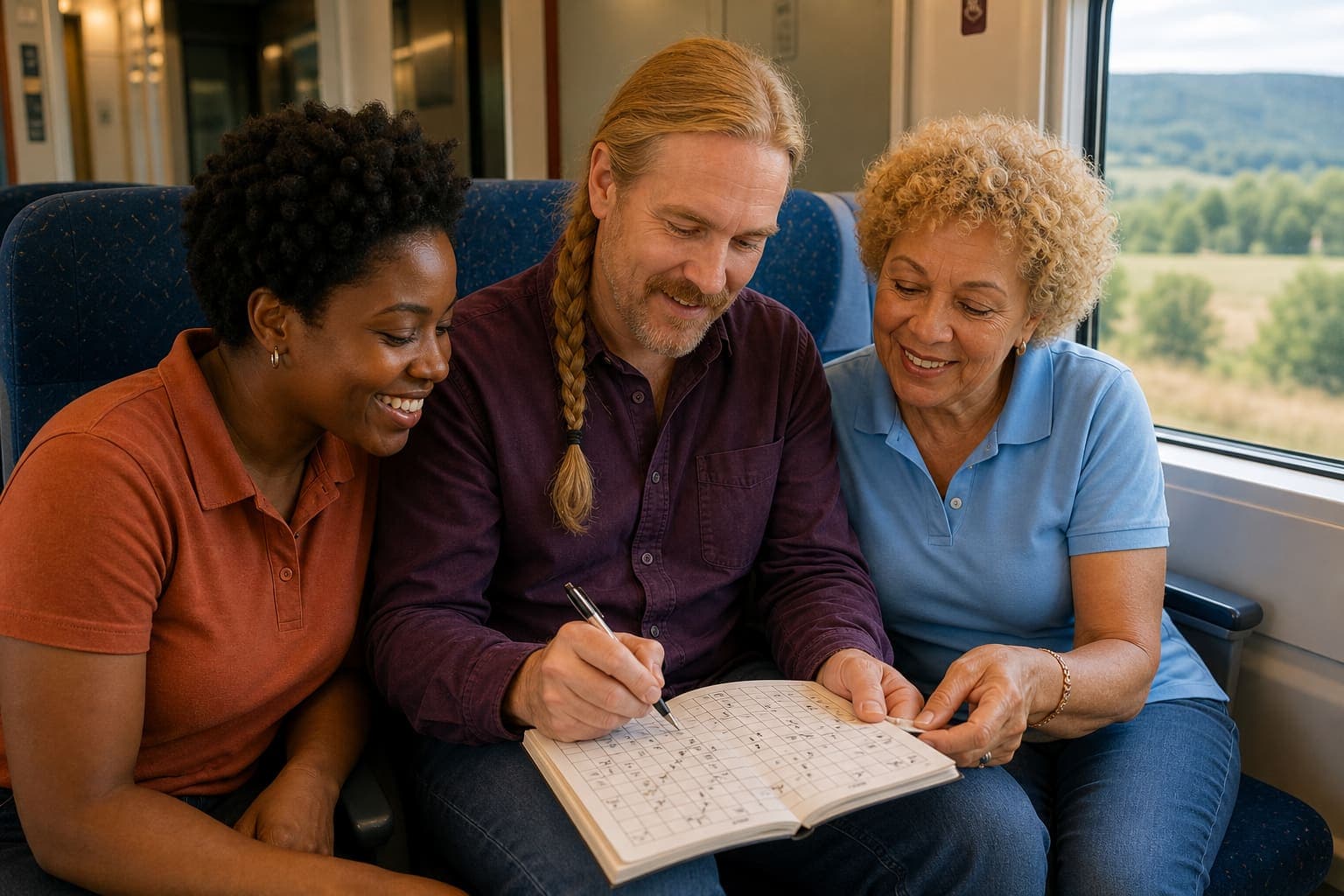
Large print crossword puzzles for seniors should be easy to see, comfortable to hold, and enjoyable without feeling childish. The best choice is not always the biggest book or the easiest puzzle; it is the one that suits the solver’s eyesight, patience, interests, and routine.
If you are choosing crossword puzzles for seniors for yourself, a parent, or a friend, look closely at the page layout, clue clarity, difficulty level, and format. Paper books, printable puzzles, and mobile options can all work well, especially when the puzzle feels welcoming rather than like a test.
Start with print size, but do not stop there
Large print matters, of course. A puzzle can become tiring quickly if the numbers, clue text, or answer squares are cramped. When you pick up a book labeled large print, open it before buying if you can. Check the clue list, grid numbers, and any instructions, not just the title on the cover.
Good large print crossword puzzles for seniors usually have generous spacing between lines, clear contrast between ink and paper, and answer squares that are large enough to write in without squeezing. Matte paper can also be more comfortable than shiny paper because it tends to create less glare under a lamp or near a window.
Pay attention to the physical book too. A thick book may look like good value, but it can be awkward if it will not stay open. Spiral-bound books, thinner volumes, or books that lie fairly flat can be easier to use on a lap, at a kitchen table, or in a waiting room.
Choose clues that feel clear, not condescending
Easy crossword puzzles for seniors should still feel like real crosswords. Many older adults have spent decades reading, working, raising families, traveling, managing homes, learning hobbies, and solving problems. A puzzle does not need to be babyish to be approachable.
Look for clues that are direct, fair, and varied. A comfortable puzzle might include everyday vocabulary, familiar phrases, food, geography, music, animals, seasons, and gentle wordplay. It should not rely too heavily on obscure trivia unless the solver enjoys that challenge.
It also helps when clue wording is consistent. If a clue asks for a plural answer, the answer should usually be plural. If a clue uses an abbreviation, the answer may be an abbreviation too. These small bits of fairness make a crossword feel satisfying instead of frustrating.
If the puzzle is for someone who gets discouraged easily, start with a book that offers several levels. That way, they can choose a lighter puzzle on a tired day and a trickier one when they are in the mood.
Match the difficulty to the moment
There is no single right level for older adults. Some seniors want quick, relaxing puzzles. Others prefer a stubborn challenge and enjoy coming back to it over several days. The useful question is not “Is this for seniors?” but “Does this fit the kind of solving this person enjoys?”
For morning coffee, travel, or a short break, smaller grids and straightforward clues may be ideal. For a quiet afternoon, a longer puzzle with more wordplay might be welcome. If someone is returning to crosswords after a long pause, a beginner-friendly book can rebuild confidence without making the experience feel like homework.
It is also worth considering answer checking. Some paper books include solutions at the back. That is helpful, but the print in the answer key should be readable too. If the solutions are tiny, a magnifier may be needed, which adds one more barrier.
Paper, mobile, or both can be the right answer
Paper crosswords have obvious comforts. They are familiar, portable, and do not require a charger. Many people simply like the feel of a pen in hand. Paper also makes it easy to leave a puzzle open on a side table and come back later.
Mobile games have their own advantages. A phone or tablet can be convenient when you do not want to carry a book, and some players like the quickness of tapping letters instead of writing them. For someone who already uses a phone comfortably, a crossword or word game can fit into small gaps in the day.
Kryss is a free crossword app and mobile word game where each turn gives a player five letters and one minute to place them on a shared board while competing against an opponent. For seniors who enjoy a little friendly competition, or who like a daily crossword-style habit that does not require a long sitting, it can be a nice option to try. It is not a replacement for a favorite paper book; it is simply another way to enjoy word play.
If you are helping someone choose a free crossword app for seniors, sit with them for the first few minutes. Make sure the screen feels readable, the pace feels comfortable, and the person actually likes the format. The best app is the one they want to open again.
Use this quick comfort checklist before buying
- Readable type: clues, numbers, and solutions should be large enough without squinting.
- Good contrast: dark print on a light background is usually easiest to scan.
- Comfortable layout: pages should not feel crowded, especially around clue lists.
- Fair clues: look for clear wording, familiar topics, and a mix of easy and mildly challenging answers.
- Manageable size: the book should be easy to hold, open, and carry.
- Flexible difficulty: a range of puzzle levels helps match energy and mood.
- Readable answers: solution pages should be as accessible as the puzzles themselves.
Playing together can make puzzles more comfortable
Crosswords do not have to be solitary. Solving with another person can make a puzzle feel lighter, especially if one person reads the clues while the other writes. This is useful when small print is tiring, hands are stiff, or the solver simply enjoys company.
Shared solving works best when it stays relaxed. Try saying answers aloud, skipping clues without fuss, and celebrating the funny guesses as much as the correct ones. A crossword can be a reason to sit together on a train, at the kitchen table, or during a quiet visit.
For families, the most respectful approach is to offer, not take over. Ask whether the person wants help with reading, writing, or brainstorming. Some people want a partner; others want the satisfaction of finishing alone. Both are valid.
Think of comfort as part of the puzzle
The right crossword is not only about the clues. It is about the whole experience: the lighting, the chair, the pen, the paper, the screen, the time of day, and the mood of the solver. A puzzle that is perfect on a sunny morning may feel too small or too hard at night.
If you are building a small crossword routine, keep a few options nearby: a large print book, a pen that writes smoothly, perhaps a magnifier if useful, and a mobile word game for times when paper is not handy. A daily crossword for seniors does not need to be formal. It can simply mean having a pleasant word puzzle ready when the moment feels right.
Most of all, choose puzzles that preserve dignity and fun. The goal is not to prove anything. It is to enjoy words, notice patterns, remember a few favorite facts, and maybe share a smile over an answer that finally clicks.
You can start your crossword journey by downloading Kryss for free on the App Store or the Play Store.
Ready to play?
Put these tips to work — solve today’s free crossword or build your own with Kryss.