How to Make a Crossword Puzzle for Friends
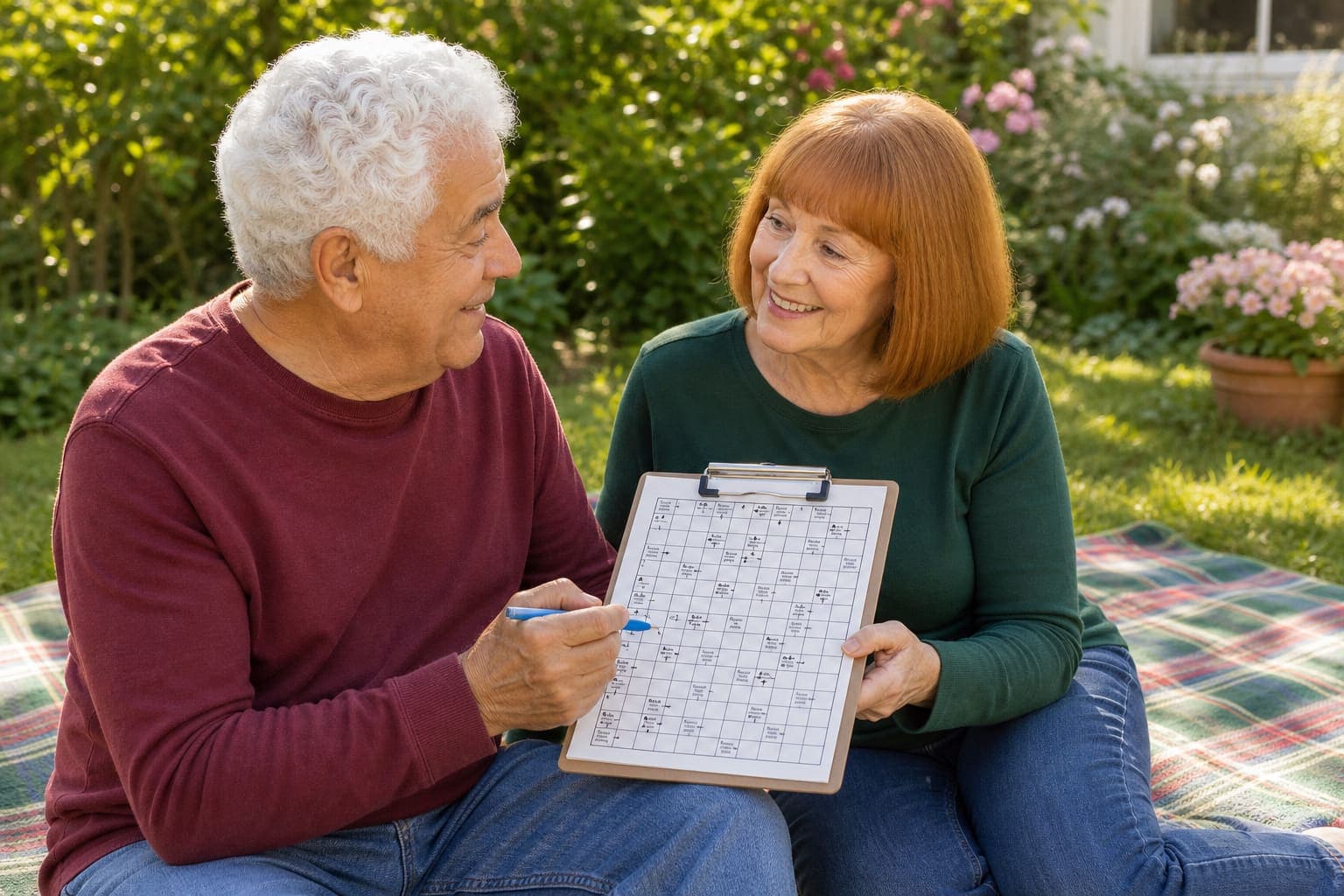
If you want to know how to make a crossword puzzle for friends, start smaller than you think. A charming puzzle does not need to look like the one in a newspaper. It needs a clear theme, words your group will recognise, clues that feel fair, and enough white space that people can finish it while chatting.
A homemade crossword is lovely for a birthday, dinner party, holiday gathering, hen weekend, book club, or relaxed game night. Treat it less like a test and more like a shared joke on paper: personal, forgiving, and easy to pick up between bites of cake.
Choose a theme that gives the puzzle a reason to exist
The easiest way to make your own crossword puzzle is to begin with a theme. Without one, you may find yourself staring at a blank grid wondering whether to include random words like “apple” and “river.” A theme gives you a useful filter.
For a birthday, the theme might be the guest of honour: nicknames, favourite foods, old holiday spots, pets, hobbies, and memorable phrases. For a holiday gathering, you could use family traditions, festive films, seasonal treats, or places people travel from.
For a custom crossword puzzle for adults, a good theme is specific but not too private. “Emma’s 50th” is more useful than “friends,” and “our summer in Devon” is more useful than “travel.” If a clue relies on a story only two people know, rewrite it so the answer can be guessed, or save it for a toast.
Make a word list before you touch the grid
Before drawing squares, collect more answers than you need. Aim for a mix of short, medium, and long words. Names are fine, but do not use only names; they can be hard to cross unless everyone knows the spelling. Add places, foods, catchphrases, pets, shared activities, favourite songs, and gentle in-jokes.
If you are making a crossword puzzle for friends at a party, write down 20 to 30 possible answers, then choose the best 10 to 15. Short answers such as “tea,” “dog,” “ski,” or “pie” are useful connectors. Longer answers like “gardenparty” or “auntieliz” can become the main showpieces.
Keep spelling simple. If someone’s name can be written two ways, use a clue that makes the spelling clear, or avoid it. You can remove spaces, hyphens, or apostrophes in the grid, but tell solvers that you have done so.
Write clues that are kind, not cryptic
Most homemade puzzles are better when the clues are straightforward. You are not trying to stump professional solvers. You are creating a word game for friends, and the fun comes from recognising the connection.
Good clues give people a fair route to the answer. They can be direct, lightly playful, or personal, but they should not require mind-reading. “Where Marta always suggests we meet” is fair if the answer is a well-known café or park. “That place, you know the one” is not.
Try these clue styles when you get stuck:
- Direct memory: “Sam’s beloved spaniel” for the dog’s name.
- Shared setting: “Village where we spent New Year” for a place.
- Gentle description: “The dessert nobody leaves behind” for “tiramisu.”
- Fill-in-the-blank: “Aunt Jo’s famous lemon ____” for “cake.”
- Either-or clue: “Not coffee, but Pat’s morning drink” for “tea.”
Be careful with teasing clues. Warm teasing can be delightful among close friends, but a printed joke can feel more permanent. If you would not say the clue kindly in front of the whole table, leave it out.
Keep the grid small enough to finish
The grid is where many first-time puzzle makers overcomplicate things. You do not need perfect symmetry. You do not need every square filled. For a casual gathering, a small criss-cross style grid is often best: answers crossing where they naturally share letters, with empty space around them.
Start with your longest, most important answer in the middle of graph paper. Then look for another word that shares a letter and place it across or down. Continue adding answers where letters overlap. If a word does not fit after a few tries, swap it for another from your list.
A grid with 10 to 15 answers can be plenty. If people will solve it over dinner, keep it shorter. If it is the main activity for a game night, you can make it a little larger. For a birthday keepsake, add a title and leave space for messages around the finished puzzle.
Number the starting squares, then write matching clues below or beside the grid. If you draw by hand, use pencil first and a dark pen once everything works. If you use a computer or puzzle maker, still check every crossing yourself. Tools can help with layout, but they cannot know whether “Gran’s blue bowl” is obvious to your family.
Test it with one honest solver
Testing is the step that turns a sweet idea into a puzzle people can actually enjoy. Ask one person who knows the group, but was not involved in making the crossword, to try it. Give them the same instructions your guests will get, and watch where they hesitate.
If they cannot solve a clue, do not take it personally. The clue may need one extra hint. If they solve everything in two minutes, you can add a few more personal touches. If two answers could both be correct, adjust the clue or add a crossing letter.
Also check the practical details. Are the squares big enough to write in? Are the numbers readable? Have you included the answer key somewhere private? If you plan to divide people into teams, print an extra copy or two.
Share it in a way that fits the gathering
How you present the puzzle matters. For a dinner, place one copy at each setting or one copy per pair. For a birthday, tuck it into a card. For a holiday gathering, leave copies near the snacks so people can drift in and out. For game night, use a gentle timer only if your group enjoys it.
You can solve as individuals, in pairs, or as one table calling out answers together. Pairs are often the safest choice because nobody feels put on the spot. If the puzzle includes family history or old memories, group solving can turn into storytelling, which is often the best part.
Have the answer key ready, but do not rush to use it. A helpful host can offer one letter, rephrase a clue, or confirm that someone is on the right track. The aim is not to prove who is cleverest. It is to give everyone a reason to laugh, remember, and join in.
When you want crossword fun without the prep
Making a personal puzzle can be rewarding, but it is still a little project. Some weeks you may want the pleasure of a crossword-style challenge without measuring grids, testing clues, or printing copies.
That is where Kryss can fit nicely. Kryss is a free crossword app and competitive mobile word game for iOS and Android. Each turn gives a player five letters and one minute to place them on a shared board against an opponent. It is not a custom party puzzle, but it is a no-prep option when you want a quick word game for friends or the feeling of a daily crossword-style challenge on your phone.
Whether you make a paper puzzle from scratch or open an app, the best crossword moments are usually the same: a word suddenly clicks, someone smiles, and the room gets a little livelier.
You can start your crossword journey by downloading Kryss for free on the App Store or the Play Store.
Ready to play?
Put these tips to work — solve today’s free crossword or build your own with Kryss.