Common Crossword Answers: Short Words Worth Knowing
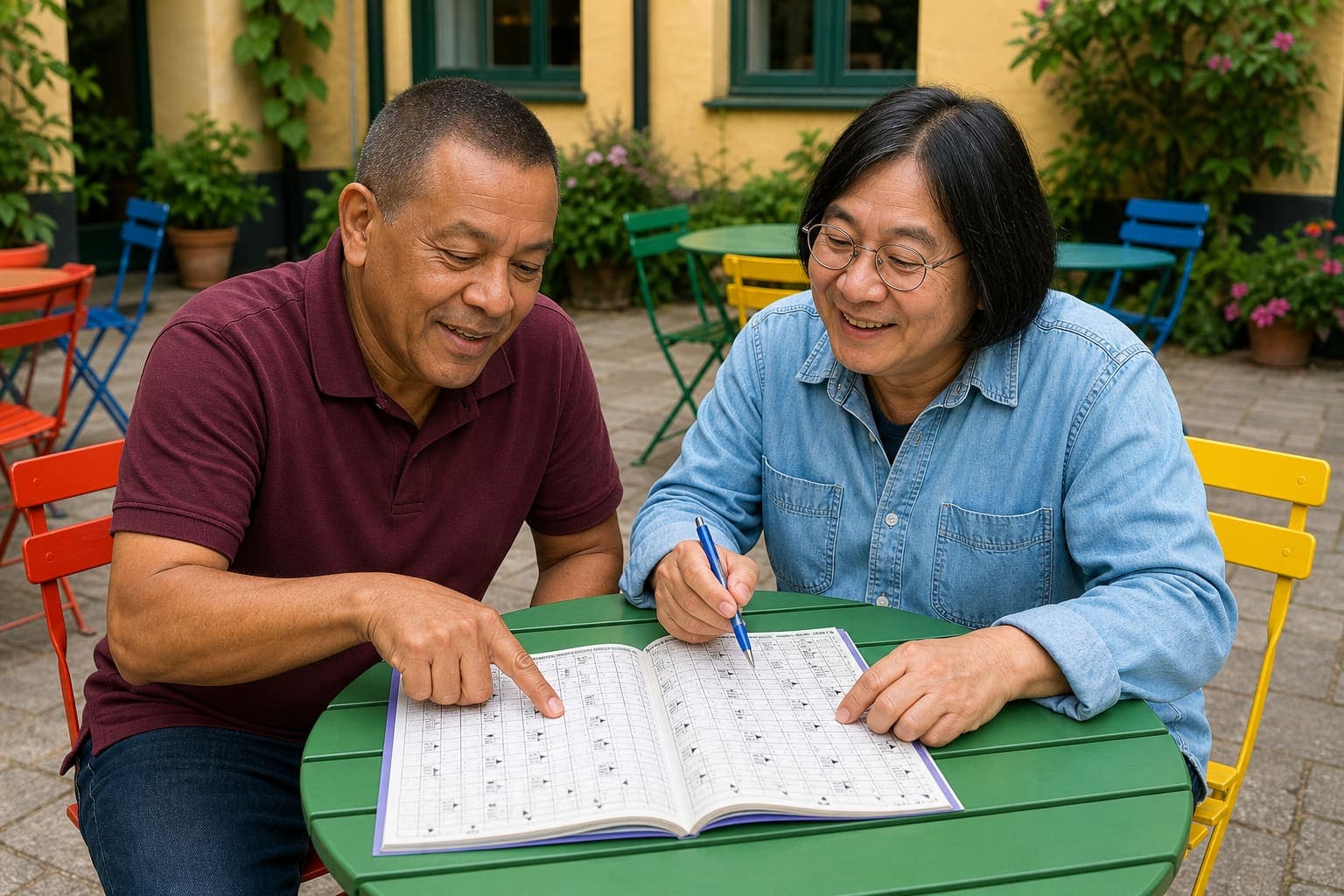
Common crossword answers are not magic passwords, but they are helpful little tools. When you start noticing the short words that appear often in puzzles, you can fill more crossings, test ideas faster, and feel less stuck when a clue looks tiny but stubborn.
This guide is for everyday solvers who want practical help with two- to five-letter answers, common endings, abbreviations, and vowel-heavy words. It is useful for a paper crossword, a daily crossword routine, or a timed mobile game like Kryss, where each turn gives you five letters and one minute to place them well.
Why short answers deserve your attention
Short crossword answers carry a surprising amount of weight. A two-letter or three-letter entry may not look exciting, but it can confirm several longer words around it. One small answer can give you the first letter of one word, the middle of another, and the ending of a third.
That is why experienced solvers often scan for short entries early. They are not always easy, and they should still match the clue, but they offer quick footholds. For beginners, this is one of the gentlest ways to learn how to get better at crosswords without trying to master every clue type at once.
In Kryss, the same habit can help because time is limited. You are not reading a long clue list; you are looking at a shared board and deciding where your five letters will do the most good. Recognizing likely short answers can make those decisions feel calmer.
Two- and three-letter words that unlock a grid
Many common short crossword answers are everyday words, but some feel more “crosswordy” because they fit neatly around vowels and consonants. You do not need to memorize a giant list. Start with small families of words that you genuinely understand.
- Articles and pronouns: a, an, he, me, we, us, it, its, she, her.
- Simple verbs: am, is, are, was, do, did, go, ran, ate, see.
- Useful nouns: era, ore, ale, inn, eel, ant, owl, arm, ear.
- Directions and positions: in, on, up, to, at, by, off, out.
- Short expressions: aha, oho, yes, no, ok, alas.
The point is not to force these into every empty space. The point is to let them become possibilities. If a clue says “period of history” and you have E-R-A available, era is worth trying. If the clue suggests a fish and the pattern is E-E-L, eel is a natural fit.
Pay special attention to vowel-heavy words such as area, idea, aria, eerie, and audio. Vowels are often the flexible hinges in a crossword grid. A word with several vowels can connect awkward-looking consonants and open up several crossings at once.
Four- and five-letter answers worth keeping nearby
Once you are comfortable with tiny entries, build a mental shelf of four- and five-letter answers. These are long enough to give useful structure but short enough to appear in many corners of a grid.
Think of everyday categories. Animals such as hare, mole, goat, and otter are useful. Food words such as rice, pear, olive, and onion come up in straightforward clues. Place words such as area, isle, road, and room are easy to recognize once crossings begin to appear.
You can also watch for common crossword answers that are not rare, but are less common in everyday conversation: omen, olio, ewer, aria, and ode, for example. If you do not know a word, look it up after the puzzle rather than pretending it is obvious. A small, honest vocabulary habit is more useful than a long list you never trust.
Endings and clue signals that save time
Endings are some of the friendliest crossword answers for beginners because they often follow visible grammar. If a clue is plural, the answer may be plural too. That can mean an S at the end, though not always. If the clue is in the past tense, the answer may end in ED. If the clue asks for a person who does something, endings like ER or OR may be worth considering.
Common endings such as ING, EST, LESS, and NESS can also help you read a pattern. Seeing _ I N G does not solve a clue by itself, but it tells you what kind of answer you may be dealing with. In a timed word game, spotting that shape quickly can be enough to choose a smart placement.
Abbreviations are another small but helpful area. Clues may signal them with words like “short,” “briefly,” or an abbreviated clue itself. Common examples include days, months, titles, compass points, and measurements. You do not need to guess wildly; just ask whether the clue is nudging you toward a shortened form.
For a daily crossword tip you can actually use, try this: before filling an abbreviation, check whether the clue and answer are speaking the same language. A clue for “doctor, briefly” might lead to Dr, while a clue for a direction might lead to N, S, E, or W. The crossing letters should support the choice.
How to practise without turning it into homework
You do not need flashcards unless you enjoy them. A softer method works well: keep a small note on your phone or in a notebook called “answers I keep seeing.” Add only the words that genuinely surprised you or helped you finish a puzzle. After a few weeks of casual solving, patterns will begin to stand out.
Another simple habit is to review a finished puzzle for two minutes. Look at the shortest answers and ask, “Would I recognize that next time?” If the answer is yes, move on. If not, write down the word with a plain meaning beside it. This turns solving into gentle repetition, not study.
When playing Kryss, use short-answer knowledge as a support, not a shortcut. You still need to look at the board, consider the crossings, and place the five letters you have been given. A familiar two- or three-letter word can help you spot a move, but it should never replace clue-reading or common sense.
The nicest thing about learning common crossword answers is that it makes puzzles feel more welcoming. You begin to see the little building blocks, not just the blank spaces. Whether you are solving a free crossword app on the sofa, sharing a paper puzzle at the table, or fitting in a daily crossword between errands, those short words can make the whole grid feel a bit more possible.
You can start your crossword journey by downloading Kryss for free on the App Store or the Play Store.
Ready to play?
Put these tips to work — solve today’s free crossword or build your own with Kryss.